



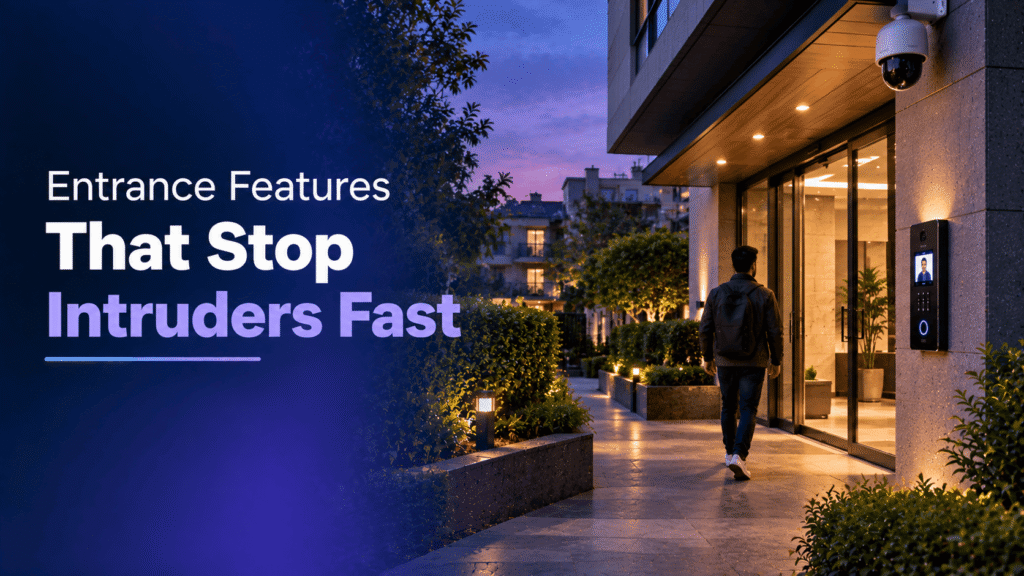
7 Entrance Surveillance Systems Features That Stop Intruders Fast
Most unwanted visitors reach a building the same way: through the front door. That makes the entrance the single most valuable place to invest in security, and it’s why entrance surveillance systems deserve more planning than the rest of a camera layout combined.
This guide covers seven features that make the biggest practical difference, why each one matters, and how they work together.
TL;DR
- Crime prevention design guidance treats entrances as a priority for visibility and controlled access.
- Video intercoms let staff or residents verify visitors before opening the door.
- Integrating cameras with access control links every entry to a face and a timestamp.
- Tailgating, where someone follows an authorised person inside, is one of the most common entrance weaknesses.
- Live monitoring turns entrance cameras from a record of events into a way to stop them.
Why Entrance Surveillance Systems Matter Most
Direct answer: Entrance surveillance systems matter most because the entrance is the one place every person must pass through, which makes it the most efficient point to verify identity, deter intruders, and record who comes and goes.
A camera on a back wall watches a small area. A camera and access point on the main entrance sees nearly everyone. That concentration is why guidance on crime prevention through environmental design, including material from the Whole Building Design Guide, treats entrances as a core focus of both visibility and controlled access.
Feature 1: Clear Sightlines and Good Lighting
The best camera in the world can’t help if the entrance is dark, cluttered, or hidden behind landscaping. Natural surveillance, meaning the ability of people to see the entrance from inside the building and from the street, is one of the central ideas in CPTED guidance, including resources published by police departments such as Anchorage Police Department.
In practice, this means even, glare-free lighting at the door, trimmed vegetation, and cameras mounted where they see faces rather than the tops of heads. Main entrance security cameras work best when they’re planned together with the physical layout, not added after it.
Feature 2: Cameras Built for Difficult Light
Entrances are tricky for cameras. A bright doorway against a dark lobby, or headlights at night, can wash out faces and make footage useless. Cameras with wide dynamic range and good low-light performance handle these mixed conditions far better than basic models.
Buildings that need coverage after dark should look at night vision monitoring options so that identifying a person at 2 a.m. is as reliable as at noon.
Feature 3: Video Intercom Entry Systems
Video intercom entry systems let someone verify a visitor’s identity before the door opens. Instead of buzzing in anyone who rings, a resident, receptionist, or remote operator sees who’s there and decides.
For buildings without a full-time front-desk presence, pairing intercoms with intercom monitoring or a remote operator adds a human check that a simple buzzer never provides. Many properties combine this with virtual doorman services so visitors are always greeted and verified, even overnight.
Feature 4: Access Control and Video Integration
Direct answer: Access control and video integration links each door event, such as a card swipe or code entry, to the camera footage from that exact moment, so every entry has both a credential and a face attached to it.
Without integration, a log might show that “card 4417 opened the door at 9:12 p.m.” while the footage sits in a separate system. With integration, a reviewer clicks the log entry and sees who used the card. This is the practical difference between access control as a lock and access control as an investigation tool.
Feature 5: Tailgating Prevention
Tailgating prevention at entrances addresses a weakness that even good credentials can’t fix: an authorised person holds the door, and an unauthorised person walks in behind them. It’s usually polite behaviour rather than malice, which is exactly why it’s so common.
Modern systems can flag when more people pass through a door than credentials were presented. Combined with signage, door hardware that closes reliably, and staff awareness, this closes a gap that cameras alone only document after the fact.
Feature 6: License Plate Recognition for Vehicle Gates
License plate recognition gate cameras extend entrance security to vehicles. They read plates at the gate, check them against an approved list, and log every vehicle that enters or leaves.
This is especially useful for residential communities, offices, and industrial sites where vehicle access needs to be controlled and reviewed. It also creates a searchable record that’s far easier to use after an incident than scrolling through hours of raw video.
Feature 7: Live Monitoring With Two-Way Audio
Recorded footage explains what happened. Live monitoring changes what happens. When trained operators watch entrance feeds, they can speak to a visitor through two-way audio surveillance, ask what they need, and alert authorities if something looks wrong.
This is the feature that turns entrance surveillance systems from passive recording into active prevention. Buildings that add live security monitoring to their existing cameras often see the biggest jump in effectiveness, because the hardware is already in place and the missing piece is someone actually watching.
How Do Entrance Surveillance Systems Work?
Direct answer: Entrance surveillance systems work by combining cameras, access control, and communication tools at a building’s entry points, then feeding that information to on-site staff, remote operators, or software that verifies visitors and flags unusual activity.
A typical setup includes an entrance camera, a video intercom or reader, a door controller, and a recording and monitoring platform. When someone arrives, the system captures their image, checks their credential or requests approval, and logs the event. If something looks wrong, an operator can respond in real time.
Common Entrance Security Mistakes to Avoid
Even well-equipped entrances fail when a few basics are missed:
- Mounting cameras too high, so footage shows hats instead of faces
- Leaving entrance lighting uneven, creating glare or shadows
- Keeping cameras and access control in separate, unconnected systems
- Recording without anyone reviewing or monitoring the feeds
- Ignoring side and service doors while focusing on the main entrance
Reviewing remote access control alongside camera placement helps catch several of these at once, especially for buildings with multiple entrances.
Entry Point Security Best Practices
A sensible approach for most buildings follows a simple order:
- Fix lighting and sightlines before buying new equipment
- Choose cameras suited to the entrance’s actual light conditions
- Add video intercom or verification for visitors
- Integrate access control and video so every entry is tied to footage
- Add live monitoring so someone can act on what the cameras see
Summary
Entrance surveillance systems work best when they’re designed as a whole rather than assembled piece by piece. Clear sightlines and lighting, cameras suited to tricky light, video intercoms, integrated access control, tailgating detection, license plate recognition, and live monitoring each close a different gap.
Buildings that start with the basics, fix lighting and visibility, connect their systems, and add someone to actually watch the feeds tend to get the most from what they already own. The entrance is where security is won or lost, so it’s the best place to put your attention first.
Frequently Asked Questions
What are entrance surveillance systems?
Entrance surveillance systems are camera and access technologies placed at a building’s entry points to verify visitors, deter intruders, and record activity. They usually combine cameras, intercoms, and access control.
Where should entrance cameras be placed?
Cameras should sit where they capture faces at eye level, with even lighting and a clear view of the door. Mounting too high or facing into bright light reduces the usefulness of footage.
What is tailgating and how can it be prevented?
Tailgating is when an unauthorised person follows an authorised one through a secured door. It can be reduced with door hardware that closes reliably, staff awareness, signage, and systems that detect when more people enter than credentials were presented.
Are video intercoms worth it for small buildings?
Usually yes, because they let residents or staff verify visitors before opening the door. Pairing them with remote monitoring adds coverage when nobody is on site.
Do I need live monitoring if I already have cameras?
Cameras alone record events, while live monitoring allows someone to respond as they happen. Adding it is often the most effective upgrade for buildings that already have hardware installed.
What does license plate recognition add to gate security?
It reads and logs every vehicle at the gate and can check plates against an approved list. That creates a searchable record and reduces reliance on manual checks.
How often should entrance security be reviewed?
At least once a year, or after any incident or layout change. Lighting, vegetation, and equipment condition can all drift over time and quietly reduce effectiveness.
